BAIFA
Google for the Blockchain, with a Forensic Toolkit.
To design a system that makes blockchain transparency accessible and actionable.
1 Year (From 0 to MVP & launch)
Lead Product Designer: Jodie Wu (Me)
Product Manager: Luphia Chang
Developers: Shirley Chang, Emily Liang, Julian Hsu, Gibbs Shih
Web - SaaS (Responsive)

Overview
BAIFA was born from a simple belief that blockchain is a revolutionary technology, but its reputation has been tarnished. It's increasingly associated with crime and money laundering, becoming linked with words like 'illegal' and 'high-risk.' But the problem was never the technology itself. The real issue is that our laws and regulatory tools haven't caught up with its rapid development and it poses a challenge for governments worldwide. So we asked ourselves how we can design a system to help judicial authorities, and even the public, effectively monitor and regulate blockchain activity?
Exploring the problem
The world of cryptocurrency compliance is inherently complex and technical. To understand the landscape, I first immersed myself in the domain by learning from our compliance experts and engineers about key concepts like AML (Anti-Money Laundering), KYC (Know Your Customer), and the challenges of tracking transactions on the blockchain.
I then conducted structured research to pinpoint the specific workflow and interface challenges our users faced daily.
User Interviews
To understand the full spectrum of user needs, I conducted interviews with two key groups: General Blockchain Users and Professional Investigators & Law Enforcement.
The research revealed a clear divide in their challenges:
-
For General Users:
While platforms like Etherscan provide a wealth of data, users found the information overwhelmingly technical and quantitative. Their main frustration was the inability to derive qualitative insights, such as, "Is this wallet address trustworthy?" or "What is the story behind this transaction?" They were looking for a more intuitive way to understand the narrative behind the numbers.
-
For Professional Investigators:
For them, the problem wasn't a lack of data, but data overload. Etherscan provided the raw building blocks, but assembling them into a coherent picture was a manual and time-consuming process. They expressed a strong need for a tool that could automate the analysis, flag suspicious patterns, and visualize fund flows intuitively, allowing them to start their deep dive from a point of focus rather than from a blank slate.
This led to three key design priorities:
-
Translate Data into Understanding: Convert raw, quantitative data into qualitative, actionable insights for everyone.
-
Prioritize and Alert: Build intelligent systems to sift through noise and surface high-risk activity for professionals.
-
Visualize the Story: Create intuitive visualizations to map transaction narratives for both clarity and investigative efficiency.
Competitor Analyses
I conducted a comprehensive analysis of two competitor categories: Blockchain Explorers (like Etherscan and OKLink) and Advanced Tracking Tools (like Chainalysis).
My goal was to identify common UX pitfalls to avoid and to find integration opportunities we could leverage.
Key Findings:
The Information Overload in Explorers:
Platforms like Etherscan, while incredibly detailed, their interfaces are densely packed with text and numbers, presenting all information at once with little visual hierarchy. This created a frustrating and overwhelming experience, making it difficult for users to find what they needed quickly.The Missed Opportunity for Insight:
Most explorers stopped at presenting raw data. They showed you the "what" (a transaction happened) but never the "so what" (is this transaction suspicious? what does this pattern mean?). They provided the ingredients but no recipe, leaving users to perform the complex analysis themselves.The Power of Visualization from Tracking Tools:
From specialized tracking tools, I learned the critical importance of visualizing transaction flows. These tools demonstrated how complex, multi-step money trails could be transformed into intuitive, interactive graphs. This was the key to making blockchain data comprehensible, not just available.
→ The Opportunity for BAIFA:
This analysis clearly defined our product's niche: to merge the comprehensive data depth of an explorer with the intelligent analysis and intuitive visualization of a tracking tool. We wouldn't just show data, we would explain it.
Understanding the Users
After gathering insights from interviews, competitor research, I translated the data into tangible user stories by defining personas and mapping their journey.These tools helped me understand who we were designing for, what they were trying to achieve, and where the major breakdowns occurred in their journey.
User Personas
Created three different key groups of Personas based on interviews

User Journey Map
Mapped the User Journey — not just platform usage, but starting from the moment users feel curious about crypto.

What I Found
The core problem wasn't a lack of data, but a fundamental failure to translate that data into understanding. Existing tools acted as overwhelming data archives rather than intelligent assistants, creating a steep learning curve and significant cognitive overload for users.
Data-Rich, But Insight-Poor
Platforms presented vast amounts of raw, technical data (like hashes and input data) without interpreting it. Users were left with the "what" but not the "so what"—they could see a transaction occurred, but had no clear insight into whether it was suspicious or what it truly meant.
An Intimidating Wall of Text
Interfaces were dominated by dense, monotonous tables and lines of code-like text. This lack of visual design and hierarchy made information incredibly difficult to scan and process, leading to frustration and user fatigue rather than clarity.
The Missing "Tracking" Layer
Identifying suspicious activity within vast amounts of data across various blockchains is a challenging task.
My goal was to
Demystify blockchain compliance by designing a system that empowers analysts to act decisively rather than just collecting data.
How ?
Translate Code into Narrative
Replace technical jargon and hash addresses with plain-language labels and insights. We transformed raw blockchain data into a comprehensible story, telling users not only what happened, but what it means.
Prioritize Risks with Visual Hierarchy
Design a clear system that instantly surfaces critical alerts, blacklisted wallets, and high-risk patterns. This guides user attention directly to what matters most, cutting through the noise of irrelevant data.
Empower a Community of Trust
Introduce a user-review system for wallets and contracts, crowd-sourcing qualitative insights. This adds a vital layer of human context and credibility assessment that pure data cannot provide.
Unify Tracking & Verification
Build seamless, integrated tools for following money flows and auditing documents. Our visual tracking tool maps transactions intuitively, while the audit tool verifies real-world documents against the blockchain.
Key Solution
With the design direction set, the following sections detail the key solutions we implemented to bring this vision to life.
From Raw Data to Human Insight
Problem:
Users were overwhelmed by endless lists of raw transaction hashes and technical data, making it impossible to quickly understand the story or risk profile of a wallet, transaction, or smart contract.
Solution:
We redesigned the data presentation to lead with insight, not raw data.
-
Instead of listing all transaction hashes, we first summarize key behaviors in plain language, such as: "This wallet has interacted with 839 addresses and 40 smart contracts."
-
All underlying technical data remains accessible with a single click for users who need to dive deeper.
→ This approach transformed the interface from an overwhelming data dump into a clear and actionable intelligence dashboard, enabling users to grasp complex on-chain activities at a glance without sacrificing depth.


Visualize Complex Information
Problem:
Manually investigating thousands of transactions to find suspicious activity is like finding a needle in a haystack, requiring immense time and expertise.
Solution:
We designed an automated risk-flagging system that continuously monitors and labels wallets and behaviors.
-
Red Flags proactively highlight patterns associated with high risk (e.g., interaction with mixing services, unusual bulk transactions).
-
Blacklists instantly identify wallets officially linked to confirmed illicit activities.
→ Users no longer need to be forensic experts. They receive actionable intelligence upfront, allowing them to focus their efforts on more important work.
Trust-by-Transaction Community
Problem:
Blockchain data alone is anonymous and lacks real-world context, making it hard for users to gauge the trustworthiness of a wallet or contract.
Solution:
We built a verified community review system where any user can score and comment on wallets or smart contracts.
-
To ensure authenticity and prevent spam, only wallets that have directly transacted with the address in question are permitted to leave a review.
→ This transforms anonymous data points into a crowdsourced trust layer, using the community's collective experience to provide credible, real-world insights that raw data cannot.


Tracking Tool
Problem:
Investigating financial crimes on the blockchain involves piecing together fragmented transaction data from countless addresses, a process that is slow, complex, and prone to human error.
Solution:
We created an interactive Tracking Tool that visually maps the entire flow of funds.
-
It automatically consolidates transactions across multiple wallets into an intuitive, visual graph, allowing investigators and users to trace money movements effortlessly and identify key connection points.
→ This transforms a weeks-long manual process into a task requiring only minutes, enabling users to see the story behind the transactions and focus on analysis.
On-Chain Trust Ecosystem
Problem:
It's difficult to verify if digital documents like financial reports or certificates are authentic and haven't been tampered with.
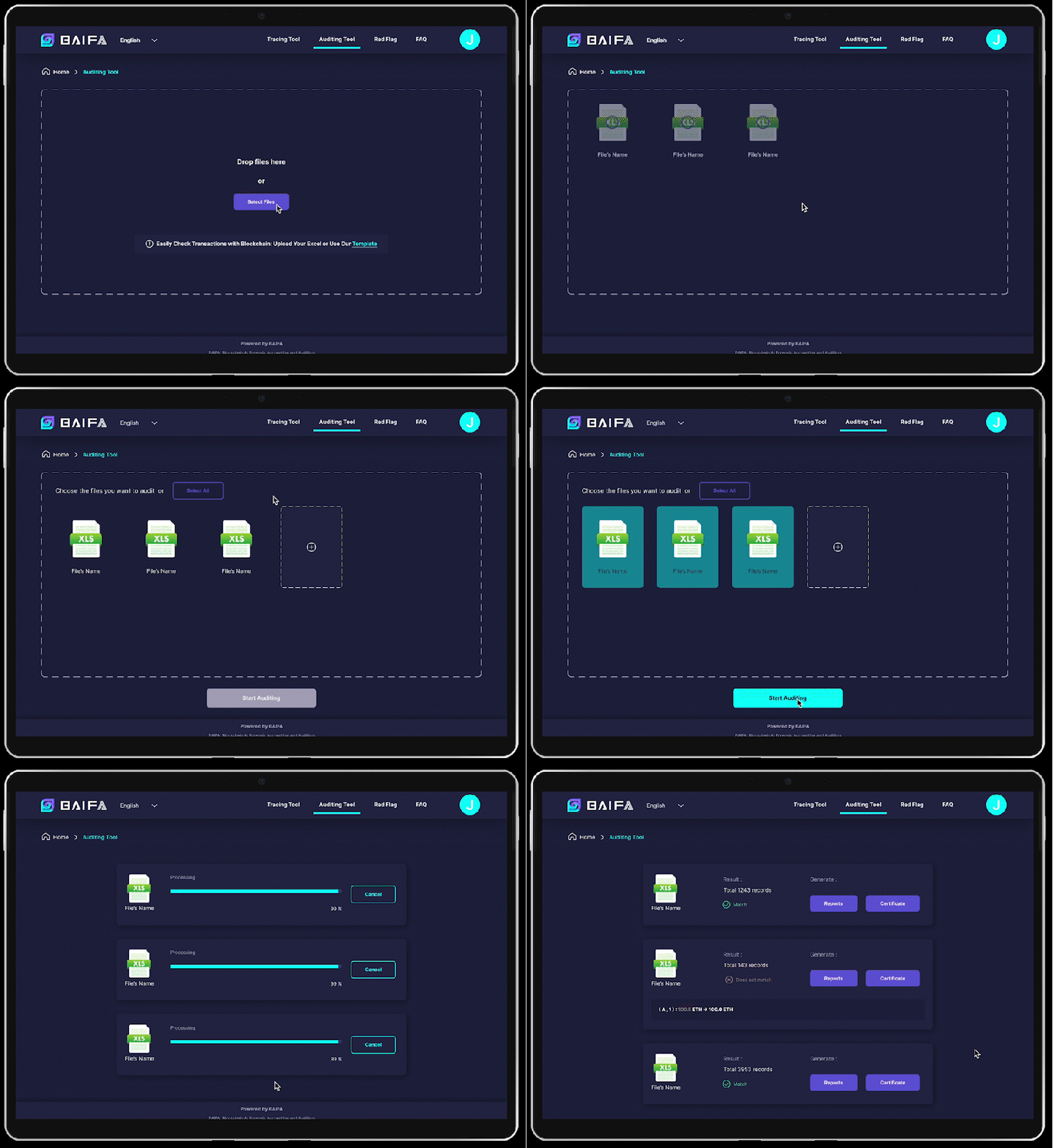
Solution:
We developed a Document Authenticity Auditor that allows users to upload any file.
-
The tool automatically checks if a cryptographic fingerprint of the document exists on the blockchain and verifies that its contents perfectly match the immutable record.
→ This provides instant, cryptographic proof of authenticity, transforming BAIFA into a trusted third party that enables secure and transparent business verification.
Design Process
In the following sections, I'll break down how I architected the system and evolved this solution from initial concepts to the final design.
Function Map
To define the product ecosystem and ensure all compliance and user needs were covered, I created a function map to visualize all features and their relationships. It also served as a key communication tool with the development team to ensure technical feasibility.
I designed 3 core functions: Blockchain Explorer with Risk Alerts, Visual Tracking Tool, and Document Audit Tool, all focused on transforming raw data into actionable insights.

User Flows
I zoomed in on Tracking Tool user flow, it allowed me to design a seamless experience which all the functions that users need are included and focus on minimizing steps.

Designing the Interface: From Sketch to Screen
With the architectural blueprint in place, I began giving form to the experience, moving from general ideas to minute additions.
Low-Fidelity Wireframes
I started with low-fidelity wireframes to rapidly test different layout concepts and information hierarchies. In this stage, I made sure all the functions were included and the flows were seamless. It also allowed me to communicate with our team and stakeholders to ensure all the users' and businesses' needs were addressed.

High-Fidelity Wireframes
Beyond the interactive solutions, the final interface employs a cohesive visual system designed to structure and prioritize dense information. This section showcases how visual hierarchy and thoughtful categorization help users quickly locate insights, reducing cognitive load and frustration when navigating complex data.

Impact & Results
While the company's go-to-market strategy evolved, the successful launch of the BAIFA MVP served as a crucial milestone that validated the design vision and created lasting value.
Validation
Delivery & Validation
I successfully shipped a fully-functional MVP from zero to one, delivering all core features on schedule. Most importantly, we validated our core hypothesis: that translating raw data into visual narratives reduced the time for analysts to identify suspicious patterns by over 30% in user tests.
Internal Adoption & Validation
BAIFA has been actively adopted by our own engineering team as a primary tool for verifying and debugging data on the blockchain. This internal reliance demonstrates the product's practical utility and accuracy in a live environment, moving beyond a theoretical concept to a trusted resource.
Enhanced Development Efficiency
I successfully championed and implemented a company-wide Design System. The development team reported that the comprehensive component library significantly reduced development timefor new features. By providing pre-built, consistent UI components, it accelerated page development and streamlined maintenance. The team estimated this initiative boosted overall development efficiency by approximately 30%.
Retrospective & Learnings
A look back at the challenges, insights, and growth that shaped this project—and me as a designer.
Align and Achieve
The challenge on advocating design system taught me to address team needs over personal principles. When facing resistance, I organized internal workshops and found a strategic compromise. I earned the team's trust not through authority, but through empathy and tangible value. This experience reinforced that finding balanced solutions often achieves more than rigidly holding ground.
Balancing Simplicity & Depth
I deepened my skill in progressive disclosure, learning to design intuitive interfaces that layer complexity for expert users without overwhelming novices.
What I'd Do Differently
Due to the expertise gap, I recognize the need to develop deeper professional knowledge in investigative work so that I can walk in their shoes during the design process. I wish I could spend significantly more time observing investigators' daily workflows to uncover their unspoken pain points.